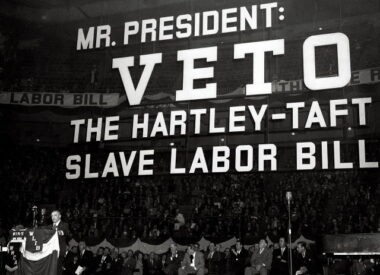
For almost 80 years, the conservative movement and the Republican Party that has served as its imperfect electoral vehicle have sought to advance three goals related to labor relations. But…
As conservatives advanced their moderate aims in the post–New Deal era, Big Labor started radicalizing. As workers’ freedom not to join unions thrived under right-to-work laws led to stalled growth…
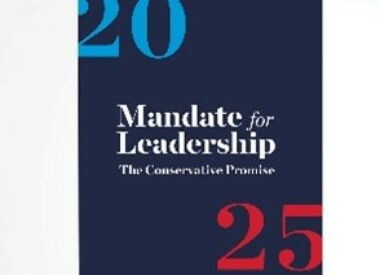
Project 2025 did not fully abandon the policies of the Taft-Hartley consensus. The document rejects the Biden administration–Big Labor approach to expanding union power and membership. But the worst proposal…
The Taft-Hartley consensus—making union membership voluntary, subjecting unions to government oversight, and protecting consumers and the economy from labor strife—worked. It apparently worked so well that conservatives forgot why they…
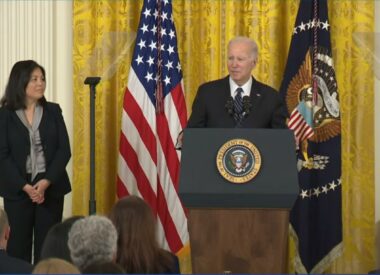
Though it is not surprising that Biden, whose campaign was heavily backed by labor unions and who has vowed to empower the unions via policy, would choose to appoint a Labor secretary…
A new version of the the Employee Rights Act (ERA) was introduced in Congress this week. The legislation focuses on increasing the power of workers over labor unions and the…
Since union strength began declining in the late 1950s, organized labor has sought to reverse its decline by numerous stratagems. The latest campaign, led once again by the SEIU, targets…
While the labor-Democratic alliance is generations old, the depth of that alliance has grown over time. As the old Southern Democrats passed from the scene, the Democratic scrutiny of organized…
A leading complaint of the “labor conservatives” is that American business, especially big businesses, is increasingly aligned with the social-liberal left. They are not entirely wrong. Under aggressive pressure from…